
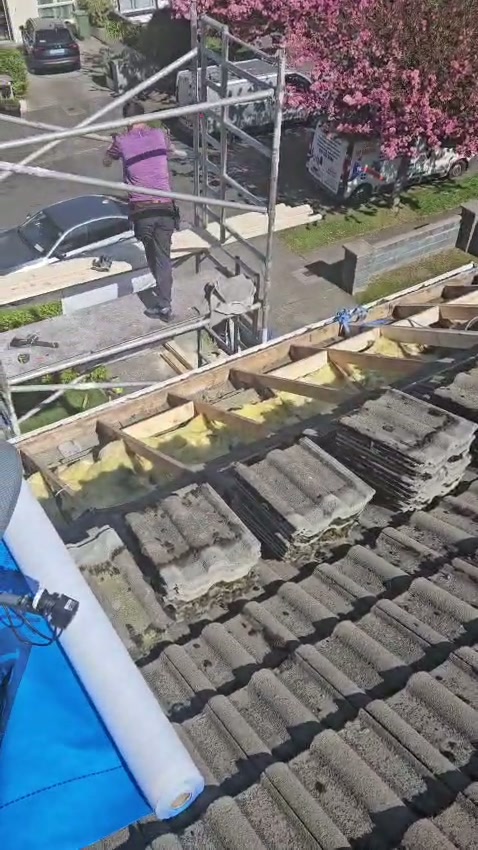
Safety first
Stay off the roof and keep everyone away from the area below it. Loose slates and ridge tiles come down without warning, and a ridge tile is heavy. If there is debris on a footpath or shared driveway, cordon it off as best you can.
If a chimney or a large section looks structurally unsafe, or there are power lines involved, treat it as an emergency service call rather than a roofing call.
Record everything
Do this before anything is tidied up — insurers ask for it.
- Photograph the damage from the ground, from every angle you safely can.
- Photograph any interior water damage and the contents affected.
- Note the date and the storm name.
- Keep receipts for any emergency work or temporary materials.
Temporary protection
If water is getting in, the priority is making the roof safe and watertight — that is a job for a roofer with the right access equipment, not a ladder and a tarpaulin in a gale. Ring us and we will tell you honestly how quickly we can get there.
The permanent repair
Once the weather settles, the roof needs looking at properly. Storms tend to expose weaknesses rather than create them from nothing, so what came off is often not the whole story — loose ridge, lifted flashings and slipped slates elsewhere are common. We check the whole roof, not just the visible damage.
Related pages: storm damage roof repair in Dublin or roof repairs in Wicklow.